Pages

Showing posts with label television. Show all posts

Monday, March 12, 2012

Series Commentary: Power Rangers: Mystic Force


Mystic Force is the first Disney season I’ve seen, and wow. I stopped watching the show at the end of the Zordon era back in the day, and I watched Mystic Force before rewatching In Space or watching any other seasons for one reason: the return of Rita Repulsa. Now, had I known that her… cameo was only in the last two episodes and it’s only through an extremely brief reference by Udonna, I might have skipped it altogether.

But I watched it, so what do I have to say? Well, I guess Disney realized in 2006 that Harry Potter was making some money. Much of the background music of Mystic Force is stolen directly from John Williams’s Harry Potter score, and so is the premise. By the way, did I mention that Disney also had a role in Mahou Sentai Magiranger, meaning they didn’t exactly have to “make do” with their Sentai footage this time around?

This series is all about Harry Potter. It’s about learning magic and reciting spells, being granted new spells as a result of their actions of bravery, and dealing with magical trials and travails of the sort that a first year student at Hogwarts might deal with.

Putting all that aside for the moment, is Mystic Force any good?

It goes through ups and downs. The series starts off pretty annoying at times, and it has some strange occurrences (such as a medieval knight whose zord is a train). How about we play to Disney’s strengths- wholesome characters and all that?

Ah, there we go. We get the Bulk and Skull-esque bitch who renounces her evil upbringing and becomes a good guy- though how she went from being an evil bitch to just being lonely was never well developed. We also get Phineas, who exists primarily as comic relief, but gets the opportunity to be pretty badass as well. The rest of the team develops a bit as well, although this development is overshadowed in the “everybody come together for the sake of good” ending. Still, Xander is less annoying at the end, Chip and Vida move on just enough that we don’t actually see a relationship develop, Nick becomes less scared of commitment and Madi becomes slightly bolder. It’s pretty cookie cutter Disney, but it gets the job done and you come to like the characters.

How about the villains? Well, honestly, the only villain worth remembering is the only one who becomes an undeveloped hero at the end. Sure, I stop to wonder how Daggeron so quickly went from being a hero to a villain to a mummy that, once locked away, was able to stand up to Koragg, but that doesn’t make Imperius a memorable villain. Maybe Cthulhu just made him that much stronger?

Oh, yeah, Cthulhu is the enemy.

The one thing that bothers me the most about this series is the graphics. I know, this is a purely subjective thing and this is my biggest complaint with Dino Thunder and will probably be my biggest complaint with other series. CGI zords just completely throws off the mood. Yes, I’m a fan of Power Rangers: The Movie, but at least their CGI isn’t as bright and flashy and it still has a ring of nostalgia to it to go with the terrible CGI.

That’s not the worst of it, though. The worst of it is eye-gouging CGI followed by practical effect zord battles. If you do CGI, don’t do something else to show me how terrible it is. You fail, sir.

This isn’t supposed to be a review, but I feel obliged to make a recommendation. This is the first “modern” Power Rangers series I’ve seen. Do I recommend it to people like me? Uh… maybe? I’m a completionist, so in the end, I can’t say no. If you like the cheesy side of Power Rangers, definitely watch it. The more serious side… eh… probably not.


Bill Silvia is a regular contributor at Fantasy & SciFi Lovin' News & Reviews. You can find more of his content at http://www.MiBreviews.com

Series Commentary: Power Rangers: Mystic Force


Mystic Force is the first Disney season I’ve seen, and wow. I stopped watching the show at the end of the Zordon era back in the day, and I watched Mystic Force before rewatching In Space or watching any other seasons for one reason: the return of Rita Repulsa. Now, had I known that her… cameo was only in the last two episodes and it’s only through an extremely brief reference by Udonna, I might have skipped it altogether.

But I watched it, so what do I have to say? Well, I guess Disney realized in 2006 that Harry Potter was making some money. Much of the background music of Mystic Force is stolen directly from John Williams’s Harry Potter score, and so is the premise. By the way, did I mention that Disney also had a role in Mahou Sentai Magiranger, meaning they didn’t exactly have to “make do” with their Sentai footage this time around?

This series is all about Harry Potter. It’s about learning magic and reciting spells, being granted new spells as a result of their actions of bravery, and dealing with magical trials and travails of the sort that a first year student at Hogwarts might deal with.

Putting all that aside for the moment, is Mystic Force any good?

It goes through ups and downs. The series starts off pretty annoying at times, and it has some strange occurrences (such as a medieval knight whose zord is a train). How about we play to Disney’s strengths- wholesome characters and all that?

Ah, there we go. We get the Bulk and Skull-esque bitch who renounces her evil upbringing and becomes a good guy- though how she went from being an evil bitch to just being lonely was never well developed. We also get Phineas, who exists primarily as comic relief, but gets the opportunity to be pretty badass as well. The rest of the team develops a bit as well, although this development is overshadowed in the “everybody come together for the sake of good” ending. Still, Xander is less annoying at the end, Chip and Vida move on just enough that we don’t actually see a relationship develop, Nick becomes less scared of commitment and Madi becomes slightly bolder. It’s pretty cookie cutter Disney, but it gets the job done and you come to like the characters.

How about the villains? Well, honestly, the only villain worth remembering is the only one who becomes an undeveloped hero at the end. Sure, I stop to wonder how Daggeron so quickly went from being a hero to a villain to a mummy that, once locked away, was able to stand up to Koragg, but that doesn’t make Imperius a memorable villain. Maybe Cthulhu just made him that much stronger?

Oh, yeah, Cthulhu is the enemy.

The one thing that bothers me the most about this series is the graphics. I know, this is a purely subjective thing and this is my biggest complaint with Dino Thunder and will probably be my biggest complaint with other series. CGI zords just completely throws off the mood. Yes, I’m a fan of Power Rangers: The Movie, but at least their CGI isn’t as bright and flashy and it still has a ring of nostalgia to it to go with the terrible CGI.

That’s not the worst of it, though. The worst of it is eye-gouging CGI followed by practical effect zord battles. If you do CGI, don’t do something else to show me how terrible it is. You fail, sir.

This isn’t supposed to be a review, but I feel obliged to make a recommendation. This is the first “modern” Power Rangers series I’ve seen. Do I recommend it to people like me? Uh… maybe? I’m a completionist, so in the end, I can’t say no. If you like the cheesy side of Power Rangers, definitely watch it. The more serious side… eh… probably not.


Bill Silvia is a regular contributor at Fantasy & SciFi Lovin' News & Reviews. You can find more of his content at http://www.MiBreviews.com

Monday, March 5, 2012

Series Commentary: Power Rangers: Dino Thunder


When I heard about Power Rangers: Dino Thunder, I wanted to watch it. Then I saw the CGI sequences, and wanted to forget all of the things I had heard about it. Even with the return of Tommy Oliver, I didn't want to see this CGI shit-stain on my childhood.

Finally, I watched it.

Let me pitch it to you and let you draw your own conclusions.

Three high school students from very different walks of life- not my high school, where the nerds and jocks were more often than not the same people, but your expected stereotype characters (to start with). A bitch principal- and I don't mean the harsh but well-meaning one, I mean the one who feels she's best done her job on days that she sent the most people to detention. Unrealistic indulgence character, yes, but there's a reason for it, if just as unrealistic and indulgent.

Okay, if you need to know, she's one of the Lieutenants of the Pure Evil Big Bad.

The mysterious yet cool new science teacher is a man named Dr. Oliver. This is probably the most serious attempt Power Rangers has ever made to bring in older viewers. It probably would have been cool to bond with a younger sibling over episodes with Tommy, the only Ranger I've seen who routinely attacked giant monsters, successfully, with his Ranger weapon.

Our "bully" character for this season really isn't that. Cassidy and Devin are your Season 2 Bulk and Skull. Cassidy is a reporter and Devin is her friend that hangs on her every word- and of course, all reporters in this universe are eventually tasked to find the identities of the Power Rangers.

Like Bulk and Skull, Cassidy and Devin have their own character growth, just as Blue Ranger Ethan goes through the same character arc that Billy Cranston did over three seasons. This is one of those seasons that focuses on the growth of all involved (even Tommy to an extent), dedicating episodes to every protagonist and ally except for Holly, the Alpha 5 character, and a fair amount of time to the various White Rangers, Elsa, and and Zeltrax.

There were two consistent annoyances throughout this series. The first, which I'm going to have to get over, is the sudden addition of powers and minimizing of the drawbacks. Something had to be lost when the effective character growth of three seasons was combined into one, right? Still, when a new ultimate power is added with a drawback that makes it a last resort, you expect that drawback to last for more than one episode. Was this an Abaranger fault? It's possible, but if so, cutting it out completely would have been both easier and told a better story.

Moving past the rushed stories of both the Triassic Ranger, I talk about, you guessed it, the CGI. Mechs shouldn't be CGI half of the time and suits the other half. Do them practical, preferably, but if you have to do them CGI, try and shade it so it's bearable, and keep them CGI all the way. This isn't just a complaint I have with Dino Thunder, but with many of the newer Power Rangers series. Again, something I should attribute to Super Sentai? I can't know for sure until I watch the appropriate counterparts.

A related complaint is Conner's battlizer. Mainly the fact that he has CGI-fueled Namekian stretching powers. This is too many kinds of ridiculous to count. It's entirely unnecessary and completely takes you out of any scene it's in. I suppose it's necessary to make toy sales go through the roof (meme courtesy of EZ Rider), but not for any other reason.

As I said, I'll leave it to you to decide to watch it or not. Dino Thunder is basically Mighty Morphin plus CGI and camp, but there are things that might appeal more to some people than some aspects of the original show did. It all comes down to what you like in your kids' shows. I liked it- most of it.

Series Commentary: Power Rangers: Dino Thunder


When I heard about Power Rangers: Dino Thunder, I wanted to watch it. Then I saw the CGI sequences, and wanted to forget all of the things I had heard about it. Even with the return of Tommy Oliver, I didn't want to see this CGI shit-stain on my childhood.

Finally, I watched it.

Let me pitch it to you and let you draw your own conclusions.

Three high school students from very different walks of life- not my high school, where the nerds and jocks were more often than not the same people, but your expected stereotype characters (to start with). A bitch principal- and I don't mean the harsh but well-meaning one, I mean the one who feels she's best done her job on days that she sent the most people to detention. Unrealistic indulgence character, yes, but there's a reason for it, if just as unrealistic and indulgent.

Okay, if you need to know, she's one of the Lieutenants of the Pure Evil Big Bad.

The mysterious yet cool new science teacher is a man named Dr. Oliver. This is probably the most serious attempt Power Rangers has ever made to bring in older viewers. It probably would have been cool to bond with a younger sibling over episodes with Tommy, the only Ranger I've seen who routinely attacked giant monsters, successfully, with his Ranger weapon.

Our "bully" character for this season really isn't that. Cassidy and Devin are your Season 2 Bulk and Skull. Cassidy is a reporter and Devin is her friend that hangs on her every word- and of course, all reporters in this universe are eventually tasked to find the identities of the Power Rangers.

Like Bulk and Skull, Cassidy and Devin have their own character growth, just as Blue Ranger Ethan goes through the same character arc that Billy Cranston did over three seasons. This is one of those seasons that focuses on the growth of all involved (even Tommy to an extent), dedicating episodes to every protagonist and ally except for Holly, the Alpha 5 character, and a fair amount of time to the various White Rangers, Elsa, and and Zeltrax.

There were two consistent annoyances throughout this series. The first, which I'm going to have to get over, is the sudden addition of powers and minimizing of the drawbacks. Something had to be lost when the effective character growth of three seasons was combined into one, right? Still, when a new ultimate power is added with a drawback that makes it a last resort, you expect that drawback to last for more than one episode. Was this an Abaranger fault? It's possible, but if so, cutting it out completely would have been both easier and told a better story.

Moving past the rushed stories of both the Triassic Ranger, I talk about, you guessed it, the CGI. Mechs shouldn't be CGI half of the time and suits the other half. Do them practical, preferably, but if you have to do them CGI, try and shade it so it's bearable, and keep them CGI all the way. This isn't just a complaint I have with Dino Thunder, but with many of the newer Power Rangers series. Again, something I should attribute to Super Sentai? I can't know for sure until I watch the appropriate counterparts.

A related complaint is Conner's battlizer. Mainly the fact that he has CGI-fueled Namekian stretching powers. This is too many kinds of ridiculous to count. It's entirely unnecessary and completely takes you out of any scene it's in. I suppose it's necessary to make toy sales go through the roof (meme courtesy of EZ Rider), but not for any other reason.

As I said, I'll leave it to you to decide to watch it or not. Dino Thunder is basically Mighty Morphin plus CGI and camp, but there are things that might appeal more to some people than some aspects of the original show did. It all comes down to what you like in your kids' shows. I liked it- most of it.

Saturday, February 18, 2012

Series Commentary: Power Rangers: Samurai

When Power Rangers: Samurai was announced, the hype was huge. Saban was taking over Power Rangers again, and they were moving to Nickelodeon. On top of that, it was a whole team of freakin' samurai! We counted down until the big reveal, and then the Rangers came.


They had no introductions, already seemed to know each other, and the Green Ranger, on whom the first episode was focused, was completely annoying. Samurai got a little better. The characters would develop some, an "honorable villain" was introduced, and... yeah, that's about all I've got.


Here's the thing with Samurai- they're afraid to take chances. The villains have no menace to them, because they're constantly cracking jokes. At 23 episodes, Power Rangers: Samurai was the shortest season of Rangers yet, and for all the development the characters get, it shows. The most developed character is... yeah, I got nothin'. Probably the Blue Ranger, because we know all there is to know about his character: He's deadly serious, is 100% focused on training, and has no time or interest for anything else. There could have been a more developed character. Farkas Bulkmeyer, veteran of seven Power Rangers seasons returns- but Saban couldn't have that. They've mentioned in interviews that this is an alternate universe version of Bulk, along with his pupil, Spike Skullovich. Cee Lo Green sums up my response to that in two words.


For fans of the early show, Bulk's presence on Samurai was like Tommy Oliver's presence on Dino Thunder: A character who had completed the Hero's Journey coming back as a mentor figure to impart their experience on a new generation. Obviously, no one expected Bulk to be killing Moogers left and right or teaching the rangers, but we expected the Bulk we've come to know and love over the better part of a decade; the Bulk who, along with his best friend, stood up to the invasion of Earth by the United Alliance of Evil. Saban's comment? "Sorry, not him." At that point, all but the most devoted fans (read: reviewers who feel compelled to slog through this crap) said, "Sorry, not my show".


Sure, the action is okay, and there are some interesting dilemmas dealt with, but this show is too shallow for anyone outside the target age range to really like. Samurai was split into two seasons for some ridiculous reason. The real end of Season 1 was Episode 18, in October. Episodes 19 and 20 were the first two episodes, displaced from the beginning of the season for no reason that anyone seems to be able to figure out, followed by a Halloween clip-show that does nothing but make fun of the Season in what has to be the worst Halloween Special I've seen in Power Rangers History, a crossover with the previous season that was yanked from future continuity, and then a Christmas-special-slash-season-finale that is another clipshow. In other words, twenty episodes, a basically non-canon special two parter, and two clipshows. Frak this season. What really cements my anger at this season, though, is the fact that it was cut in half as a cheap marketing ploy. On the 18th of this month, the second season, Super Samurai, starts. Let it ease my anger at the way this season ended and give me something fond to remember it by. Oh, and here's the trailer for Super Samurai:


Series Commentary: Power Rangers: Samurai

When Power Rangers: Samurai was announced, the hype was huge. Saban was taking over Power Rangers again, and they were moving to Nickelodeon. On top of that, it was a whole team of freakin' samurai! We counted down until the big reveal, and then the Rangers came.


They had no introductions, already seemed to know each other, and the Green Ranger, on whom the first episode was focused, was completely annoying. Samurai got a little better. The characters would develop some, an "honorable villain" was introduced, and... yeah, that's about all I've got.


Here's the thing with Samurai- they're afraid to take chances. The villains have no menace to them, because they're constantly cracking jokes. At 23 episodes, Power Rangers: Samurai was the shortest season of Rangers yet, and for all the development the characters get, it shows. The most developed character is... yeah, I got nothin'. Probably the Blue Ranger, because we know all there is to know about his character: He's deadly serious, is 100% focused on training, and has no time or interest for anything else. There could have been a more developed character. Farkas Bulkmeyer, veteran of seven Power Rangers seasons returns- but Saban couldn't have that. They've mentioned in interviews that this is an alternate universe version of Bulk, along with his pupil, Spike Skullovich. Cee Lo Green sums up my response to that in two words.


For fans of the early show, Bulk's presence on Samurai was like Tommy Oliver's presence on Dino Thunder: A character who had completed the Hero's Journey coming back as a mentor figure to impart their experience on a new generation. Obviously, no one expected Bulk to be killing Moogers left and right or teaching the rangers, but we expected the Bulk we've come to know and love over the better part of a decade; the Bulk who, along with his best friend, stood up to the invasion of Earth by the United Alliance of Evil. Saban's comment? "Sorry, not him." At that point, all but the most devoted fans (read: reviewers who feel compelled to slog through this crap) said, "Sorry, not my show".


Sure, the action is okay, and there are some interesting dilemmas dealt with, but this show is too shallow for anyone outside the target age range to really like. Samurai was split into two seasons for some ridiculous reason. The real end of Season 1 was Episode 18, in October. Episodes 19 and 20 were the first two episodes, displaced from the beginning of the season for no reason that anyone seems to be able to figure out, followed by a Halloween clip-show that does nothing but make fun of the Season in what has to be the worst Halloween Special I've seen in Power Rangers History, a crossover with the previous season that was yanked from future continuity, and then a Christmas-special-slash-season-finale that is another clipshow. In other words, twenty episodes, a basically non-canon special two parter, and two clipshows. Frak this season. What really cements my anger at this season, though, is the fact that it was cut in half as a cheap marketing ploy. On the 18th of this month, the second season, Super Samurai, starts. Let it ease my anger at the way this season ended and give me something fond to remember it by. Oh, and here's the trailer for Super Samurai:


Monday, January 23, 2012

Series Commentary: Power Rangers: Lost Galaxy


If Power Rangers in Space, with a close-knit team flitting about in space and visiting seedy locales and deadly forest planets, was Power Rangers meets Star Wars, then Lost Galaxy is Star Trek. Here we have a core group that forms much of the command and security team, responsible for a large vessel filled with military and civilian individuals on a long-term mission, independent enough that the Commander of Terra Venture has effectively complete control over what happens to the station and the people that call it home.

When the "final" season of Power Rangers was more popular than anyone could have imagined (despite my losing interest halfway through the series as a child), Saban shrugged its shoulders and said "what the hell, let's have another one". The result was Power Rangers: Lost Galaxy, probably the single post-Angel Grove season with the most ties to the season that came before. The Megaship, which the Rangers use whenever they're not on Terra Venture, was stolen (yes, it was stolen) from its role after the finale of PRiS left it decommissioned. Tracheena is essentially a writers' response to "make Astronema again, but different". And... yeah, I just jumped two thirds of the way through the series. Oh well.

When Valerie Vernon had to leave the show for medical reasons, Kendrix sacrificed herself to save Cassie, the Pink Space Ranger, in the finale of a two-parter that saw eleven Rangers from two seasons (don't ask me why Zhayne didn''t show up) face off against the Psycho Rangers from PRiS. Rather than try and introduce a brand new Pink Ranger in a short span of time, the producers decided to have one of the girls from In Space reprise their role as a new Pink Ranger. When Patricia Ja Lee left the show for her own reasons, Melody Perkins was called upon to be the first villain-turned-black corset wearing Pink Ranger and it was glorious.

Having Karone (with the occasional cameo by Astronema) back was the highlight of the show for me. We already had the same villain quartet in Scorpius-Tracheena-Villamax-Deviot that we had had in Dark Specter-Astronema-Ecliptor-Darkonda, right down to Deviot causing Scorpius's death and wanting to be his successor. Karone being on the opposing side, and even having an unmorped fight or two with Tracheena, just made this all the more epic.

I just realized I may have an unhealthy crush on 10 years' ago Melody Perkins. Moving on.

As you can probably guess, Lost Galaxy was in many ways an attempt to duplicate In Space without being a blatant ripoff of In Space. The villains meet in different ways, taking half of the season to form the quarter I mentioned and changing much more in the process. While none of them ever were in danger of joining the Power Rangers, we go another step in exploring the perils of a noble warrior working for the forces of evil.

Lost Galaxy is so successful in copying the formula of In Space, in fact, that it comes with the same flaws. Specifically, I mean the sixth ranger. The introduction of the Magna Defender was done as well as the Silver Ranger (that is to say, as well as the Blue Centennial or the Phantom Ranger), but it was rather abrupt when Big Brother became the Defender and the constraints of a Sixth Ranger make him seem like less of a friend or a brother and more like a distant, lone wolf character that he never was when he was introduced.

Related to this issue- because the Lights of Orion were often used as an excuse to separate Max from the team- is all of the power ups they received. It's not the fact that they got power boosts that concerns me, but the fact that it seemed like more of a constant thing. In MMPR, the Rangers would gain new powers after getting their asses beat. Hard. Here, it's like more of an arbitrary reward. It's as though the marketing division were afraid toy sales would plummet the minute they stopped promoting new ones.

This was the last strictly linear Power Rangers season. They would continue until Operation Overdrive having crossovers that defined continuity, but other than those special events (thirteen or so episodes in the next eight years), continuing cast members like Bulk, Karone and Professor Phenomenous would be a thing of the past.


Bill Silvia is a regular contributor at Fantasy & SciFi Lovin' News & Reviews. You can find more of his content at http://www.MiBreviews.com


Monday, January 16, 2012

Series Commentary: Power Rangers in Space

Power Rangers in Space is widely regarded as the greatest season in Power Rangers, and it's not hard to see why. After Turbo, Studio execs knew that a drastic change in the series was required in order for Power Rangers to keep breathing. The result, something that I thought of at the time as jumping the shark, was to take the series into space.

But space wasn't the only change made in Power Rangers in Space. Individual zords were done away with, and even when they came back, they were no longer ridden into battle the same way they were before. The Red Ranger, rather than being a natural leader and a friend to the Rangers from the start, was a loner and outsider- a Space Elf, if anything. But these were just the most superficial of changes.

No, the real change was the scope, and the villains. Dark Specter, the ruler of the United Alliance of Evil, loomed like a shadow over everything the Power Rangers had ever accomplished. We saw Lord Zedd, Rita Repulsa and Divatox, vanquisher of the Turbo Rangers, literally brushed aside in favor of Astronema, played by the then twenty-something Melody Perkins. For the first time, we had a villain who was young and had an air of mystery about her (nobody ever asked about the origins of Rita, Zedd or Divatox), who embraced the attentions of the young audience and was damned sexy to boot (more on that next time, I promise). She was also a diverse actor with no Megaranger footage to speak of.

Astronema's lieutenant, Ecliptor, was the first morally grey villain on the show. Despite being dedicated to the team of evil, Ecliptor was an honorable opponent, an honest warrior who sided with the strongest side, raised Astronema for Dark Specter, and generated audience sympathy without raising too many questions as to why he would stay with the Alliance, save for one gamble toward the end of the season that I'll get to in a minute. Ecliptor was not only the Goldar of this season, but in many ways he was also the Lord Zedd, and one of the most powerful sentient threats the Power Rangers have ever faced. E.Z. Peterson of Toku Time has stated on Twitter in regards to his Top 10 Power Rangers Villains episode, had Astronema not taken the #1 spot, the top two villains would have been Ecliptor and Darkonda.

If Ecliptor is the more machine than man warrior that we love to hate, Darkonda, his counterpart, is the one that we just hate. Darkonda is a vicious brute, Boba Fett if you crossed him with Jabba the Hutt and Grand Moff Tarkin with just a hint of Darth Maul. He literally has nine lives (you even see him keeping score at one point) and only Ecliptor can face him in a fair fight- if Darkonda ever fought fair, that is.

While Darkonda is the last villain introduced to the series, he really finalizes the tone of PRiS. A bounty hunter that can be seen visiting seedy cantinas, laying traps and having a mysterious relation to the past of the main characters on both sides? This show may blatantly borrow from Star Wars, but it does so in an original way. Every Star Wars similarity is an obvious reference and homage, making Power Rangers in Space a unique blend of Star Wars, Power Rangers, and something new- something with a main villain who both the Silver Ranger and the audience want to spend the night between episodes with every time she's on screen.

Now that I've mentioned Zhayne, I should say he's the one real disappointment of the season. He's not a total joke like some later Rangers, but he's the first real instance of a sixth ranger who could really help whenever he wants, but the Sentai footage doesn't allow that. They make some effort to blatantly write him out of episodes he doesn't need to be in, but that's the thing, it's blatant every time. This may be nostalgia talking, but when the Green Dragon Ranger couldn't make every fight, we believed the excuses, and they felt natural. Here, we have scenes like Cassie blatantly telling Zhayne to sit the fight out and rest. Add that to scenes talking about the Silver Ranger's awesome reputation when we never see him doing anything that his friend and partner Andros can't do, and the Silver Ranger just seems like a pretty wrapping on an average character. After the Green Dragon Ranger, the White Ranger, the Gold Ranger, the Blue Centurion and the Phantom Ranger, this is all too obvious and comes across as a let down. This wouldn't be the first time that the writers had trouble matching the needs of the Sentai footage to a new story in regards to the team's trump card, though.

It's obvious that I love this show, even as an adult, and I would probably need a full review to talk about everything that I want to, but I'm going to start easing this commentary out. I promised I would talk about the one time Ecliptor and Astronema questioned their alliance to evil, so that will be the last thing I mention here. This was really a huge gamble for the show- Astronema develops various allegiances to the Red and Silver Rangers, and openly questions if she's on the right side while coming to enjoy the company of the whole team. Ecliptor's allegiance as a surrogate father is of much greater import to him than the Alliance, so he backs her up.

There were three ways to go forward with this plot. The first, and probably most predictable route, would be to eliminate or heavily weaken the Rangers' new allies, allowing Darkonda and possibly a new enemy to rise in their place. The second route would be to allow them to step in as extra not-quite Rangers, similar to how Ninja Storm would have a two-man Ranger team in addition to the main team and the sixth Ranger.

The third route- the route Saban chose- was to take Astronema and erase her character, leaving her under the cyborg control of Dark Specter. This left Locutus- I mean, Astronema- as an even more ruthless, deadlier enemy that the Rangers could not bring themselves to attack.

I was really iffy about this when I first saw it, but the In Space writing team pulled it off. I still think more could have been done with these characters, but I understand why they made the choice they did, and I maintain that it was a better decision than having never had the redemption plotline in the first place. Ultimately, it was much less contrived than creating a new Big Bad in the eleventh hour, or even letting Darkonda run the last group of episodes.

I said I'll this commentary a while ago, so about the two-parter that was supposed to end Power Rangers for all time, all I'll say is that it does its job extremely well, in addition to setting the foundation that Lost Galaxy would come to be built on.


Bill Silvia is a regular contributor at Fantasy & SciFi Lovin' News & Reviews. You can find more of his content at http://www.MiBreviews.com

Monday, January 9, 2012

Series Commentary: Power Rangers Zeo and Turbo

Mighty Morphin Power Rangers was unquestionably one of the highest points of the series. Eventually, though, Saban tired of shooting new footage, and Mighty Morphin Alien Rangers could only exist for so long. This brings us to Power Rangers: Zeo. Where did the series go after the Power Rangers stopped being Mighty when they Morphed?


Power Rangers: Zeo was a great premise, a fact you can see some evidence for in the show. The Zeo crystal is said to get stronger as time goes on, and to be such a source of power that its acquisition was the first goal of Season 3′s temporary villain, Master Vile. Naturally, this should make for extremely powerful rangers, and this shows with an entire team of Rangers carrying swords- usually the Red Ranger’s weapon- in addition to their other weapons and Zeo crystal-charged special attacks.


The downsides to this season started when Ohranger, the original source material, had to be rewritten for sociopolitical reasons that kept it from being as dark as the series would indicate. For whatever reason, the Sentai footage from Ohranger just seems that much worse than anything from Zyuranger, Dairanger or Kakuranger (the three series used to form the backbone of Mighty Morphin). The “noble” Bulk and Skull revert to their bumbling phase, and we see a lot more of Rocky, who became even less of an interesting character when he stopped being a Red Ranger and just became a pointless character. Justin was a better Blue Ranger than him, and Justin’s primary purpose was to be an annoying kid that viewers could associate better with.


On top of this, we get Rito and Goldar, and Sprocket. Just too much comic relief for my taste. Maybe it was great for kids, but I just wasn’t a huge fan.


Still, beside these downsides, Zeo wasn’t terrible. I can’t really give it any compliments I didn’t give Mighty Morphin, but other than the image quality, it continues the trends set by the ending of Mighty Morphin, some of which I liked, some I didn’t. Billy remained in this season, although not as a Ranger, and of course the Gold Ranger saga was as epic as that of the Green Ranger during its run.


And then we shifted into Turbo.


I hate to be cliché. I really do. I’m not a fan of bandwagons. For this reason, it breaks my heart to talk about Turbo. Jason David Frank made a decision at the beginning of the series to leave, which causes the first third of the season to show the same footage of him driving a race car over and over as he does things like miss his friends’ graduation to practice racing. Unmorphed fights are less and less compelling without Tommy, and many of them center around Justin, which is just ridiculous. The villains are terrible and exist for comic relief, and I’m going to quote a Youtube comment I made around the midpoint of the series to show just how little Mighty Morphin fans have to look forward to in Turbo:


Jason, the original Red Ranger, gone at the end of Zeo. Zach and Trini, the original Black and Yellow Rangers, gone during the second season of Mighty Morphin.

Kimberly, the original Pink Ranger, gone during the third season of Mighty Morphin.

Tommy, originally the Green Ranger and the team leader ever since, effectively gone at the beginning of Turbo and completely gone a third of the way through.

Zordon, the original mentor and creator of the team, gone at the beginning of Turbo.

Ernie, the owner of the Youth Center and a major character from Episode 1, gone after a cameo in the Turbo movie.

Bulk and Skull, turned into chimps (the episode after I made this remark, they were turned back into bumblers).

Aisha, the second and second most interesting Yellow Ranger, gone at the end of Mighty Morphin.

Adam, a fan favorite, gone a third of the way into Turbo.

Rocky, the second Blue Ranger, gone during the Turbo movie.


You see where I’m getting with this? The utter lack of a badass sixth ranger- two part-time sixth rangers share that role, to varying degrees of success.


The plots got so ridiculous and the characters had such little connection in Turbo that the series felt the need to leave the planet Earth for Power Rangers: In Space. For once, such drastic action was demanded and justified.


Until next time, with Power Rangers: In Space!


Bill Silvia is a regular contributor at Fantasy & SciFi Lovin' News & Reviews. You can find more of his content at http://www.MiBreviews.com

Monday, January 2, 2012

Series Commentary: Mighty Morphin Power Rangers


Between my first commentary and my second, I watched a grand total of six seasons of Power Rangers. I'm going to post them as they were written, though without the six month wait, but not necessarily in the same order. The sixth season that I watched, in attempting to learn the role of the Mystic Mother, was Season 14, Mystic Force, which means that anything I've watched in the past year will likely be presented before that (hopefully I won't seem too much a fool to your more knowledgeable minds once you get to that commentary).

Why did I not do a commentary on each episode or each season? Frankly, because I do not want to be accused of mimicking somebody else’s project. Yes, it was Lewis Lovhaug, also known as Linkara, that inspired me to rewatch the show. Yes, I do have a review project in the works. The problem here is not making a work that could potentially be labeled a rip-off, as well as creating a work that could accidentally become a rip-off; that is, creating something that already exists just because I think it would be cool to do. As a result, I’ve laid down blueprints for a project that might not come into fruition until Season 19 is in mid-season. If I’m lucky, History of Power Rangers will have finished Episode 17 by then. Unless, of course, he changes S.O.P., in which case Episode 18 could well be ready.

What else, apart from the show? Yes, I did an April Fools’ review of Scorpion Rain. I have not seen any original tapes of Scorpion Rain, and if they do exist I would be very appreciative if somebody were to up them onto Youtube and advertise them. Yes, I’m watching Samurai. Yes, I’m wondering where Skull is, and whether the uniform actually helped him in conceiving Spike. I tried to work out a timeline where it could be conceivable that Kim was the mother, but the only way that would fit in continuity is if she never actually left for the Peace Conference or met somebody there. So I’m throwing off that idea. Sorry, Lewis. (Writer's note: I gave up on Samurai after this due to the site I was watching it on. Not that the first two episodes were published as 19 and 20, I'm giving it another try, but I have no comment beyond what I wrote here as of yet).

On to the commentary.

The more I think about the three Mighty Morphin seasons, the more I conclude that one season was not the best. Rather, these three seasons are equally the best for different reasons. The best characters by far are in the first season and a half. I don’t just mean they’re my favorites, I mean they’re the best written, with the most interesting plot, characterization, personal dilemmas, friendships, so on and so forth. The chemistry with these five actors is incredible, and Jason David Frank doesn’t hurt anything when he joins the team. In the second season, we get a slight step down with the characters as we bring in Rocky, Adam and Aisha. It really took me until well into season three for me to distinguish Rocky from Adam; that’s how much interesting plot there was for them. As a child, not knowing much about Asians, lamps, or that they weren’t all equally skilled in Martial Arts despite Rocky wearing a black belt, it took until Turbo.

In the third season, we lose even more beloved characters: Tommy’s beloved Kimberley, replaced by Katherine, my least favorite ranger of the six seasons I’ve read so far. It’s here where it becomes even more pronounced that the Season One rangers are pretty much forgotten- you go through close to a season with Tommy appearing as almost a supporting character. Not a pleasant feeling when none of the new characters are unique enough in their portrayal to form any kind of bond with them. Kat was unique, but I couldn’t stand her so her episodes were not a plus.

There was a more menacing air at times with Zedd, but it wasn’t constant. As time went on, there was even more chlidish humor with Zedd than without, mostly after the wedding, then the appearance of Rito. Still, Season 3 had the most intense story- but also the most humor, in ways that I feel hurt the story and kept it from being the best season as I had felt as a child when I focused only on the action.

Part of both the glory and the weakness of Season 3 was how much new footage was used (and the real reason the ninja rangers, alien rangers and Zeo rangers came into play). For those who aren’t aware, the morphed sequences (save the White Thunder Ranger) of the three Mighty Morphin seasons were all from Zyuranger, which is where the Z on the Mega Dragonzord and Ultrazord from Season 1 come in. The Thunderzords are from Dairanger, which makes me assume that the actual Zord summoning scene is a bit of SFX work by Saban, with the Ninja and Alien Rangers (along with the three sets of Zords in Season 3) are all from Kakuranger.

The reason I speak on the new footage though, is that it means more of an emphasis on the non-morphed, because there’s less effort made to match sentai footage. While the ninja scenes were created following the same formula as season 1, there was less morphed footage to use, which means there was more reason to use non-morphed footage. The reason I speak on it being a curse is because with more need for unique scenes, Power Rangers has consistently gone the route of a children’s show. This means Rito and Goldar, fitting into the roles you would see in Zeo. This is also related to Bulk and Skull‘s ups and downs, as writers of different seasons (even different episodes) seem to change between what we saw emerging in season 2, the same characters we saw in season 1, or the bumblers we saw in between.

Still, the first three seasons are the masterpiece. They’re fairly menacing, successful with their comedy, have epic non-morphed fights, generally very memorable characters (Rocky and Tanya being the major exceptions) and interesting stories. Even in the season I criticize for paying the least attention to Tommy and Billy, the two remaining season 1 Rangers, we get Mighty Morphin Alien Rangers, which focused a major plot around Tommy, Aisha, Rocky, Adam and Katherine going on spiritual journeys, with Billy existing as the only active Ranger- but without his powers. The one criticism I have for this miniseries (which is really part of Season 3) is that it doesn’t act as much in the role of a bridge between seasons as it could. Sure, we don’t want to give everything for the season premiere away, but Tommy’s wearing all white throughout this, learning from a falcon, very excellent characterization for the White Falcon Ranger. Except the writers knew we would never see the White Falcon Ranger again. How about some red- perhaps in the form of a gift, or in some memory of Jason; hell, even in the form of an injured Tommy showing blood? This is the most memorable journey for me; without rewatching, I honestly couldn’t tell you if Rocky or Adam had any Zeo hints, but I seriously doubt it.

That’s all for today. Next time, I’ll be covering the last two Earth seasons. Or something like that. The last two seasons with any of the original cast, other than Bulk and Skull.


Bill Silvia is a regular contributor at Fantasy & SciFi Lovin' News & Reviews. You can find more of his content at http://www.MiBreviews.com

Monday, December 26, 2011

Episode Commentary: Mighty Morphin Power Rangers Episode I


Tokusatsu - be it Kamen Rider, Godzilla, or American adaptations such as Mighty Morphin Power Rangers, has a strong basis in both Science Fiction (giant mechs, by definition, are Sci-Fi) and Fantasy. In fact, as far back as I can remember, Mighty Morphin Power Rangers may be the very first show with Sci-Fi elements that I not only watched, but was marketed toward me. Superheroes, Star Wars and Star Trek would come later (among many others), but in the days surrounding my fifth birthday, Mighty Morphin Power Rangers would give me a love of giant robots, dragons rising from the depths, and many other tokusatsu and Sci-Fi tropes that I've learned to love. It is for this reason that I join you with my commentaries on first Saban, then Disney's Power Rangers, starting with my brief comments on Mighty Morphin Power Rangers Episode 1: The Day of the Dumpster.

I initially wasn’t going to do write this down, given Linkara’s excellent retrospective series about Power Rangers, but I felt the need to put my two cents in after watching the first episode for the first time in years last Fall.

The one thing that I don’t believe Linkara covered that I felt the need to comment on was the ending of the first battle of the Power Rangers series. There’s also the fact that the entire episode felt choppy, as though they were doing their solid best to keep it from becoming a two-parter with everything that they needed to explain, and it suffered for it.

The ending of the battle, though, perplexes me. Here we have the leader of Rita Repulsa’s forces, a general who has presumably conquered entire worlds in the past. He may be a bit rusty, sure, but he’s the best his army has and he knows it. He faces the first, and potentially last line of defense Earth has against his types of magic. They’re pulling out all the stops, bringing out the most powerful of their weapons, and he fights them to a stand still.

Put yourself in Goldar’s position now. You may be breaking a sweat for the first time in a century, but you’re facing a one-time chance to defeat your opponents while they’re green, before they can learn who you are or how to make full use of their powers. They’re not beating you- again, it’s a relative standstill. You were actually winning before they pulled out their sword, and guess what? You have a sword, too.

So would you retreat, work out, and face them again after they’ve had time to learn how to use their powers, thereby becoming an exponentially more powerful enemy, or would you take one for the team, risk whatever injuries they may be capable of inflicting on you, to wipe out Earth’s last line of defense on its first day? It’s a no brainer, isn’t it?

I guess they hadn’t yet gained the ability to evolve beyond Sentai footage.

This was originally going to be a one time thing, but after this episode, I felt compelled to watch the first season, then the first series, then the entire Saban line, then the entire run of Power Rangers-related shows. So be sure to stay tuned as I dedicate my next month of posts to the show that keeps introducing new generations of fans to Sci-Fi as it did mine.


Bill Silvia is a regular contributor at Fantasy & SciFi Lovin' News & Reviews. You can find more of his content at http://www.MiBreviews.com

Monday, January 10, 2011

What Would We REALLY Tolerate?

I posted a link a couple of days ago on my Facebook page from an article at Cracked.com about the "5 Things TV Writers Apparently Believe About Smart People" (great read if you haven't gotten to it yet) and it got me thinking about the hyper-reality world that exists on-screen and the disconnect between it and the real world. The Cracked.com article specifically speaks to the super-intelligent types we see on shows like "House" and "Fringe," and the bad behavior they can get away with thanks to being smarter than anyone else in the room. But I think the topic can be broadened to encompass all kinds of behavior that we'll accept as normal just because we see it on television. But what would we REALLY tolerate?


Would We REALLY Tolerate a Serial Killer Vigilante?


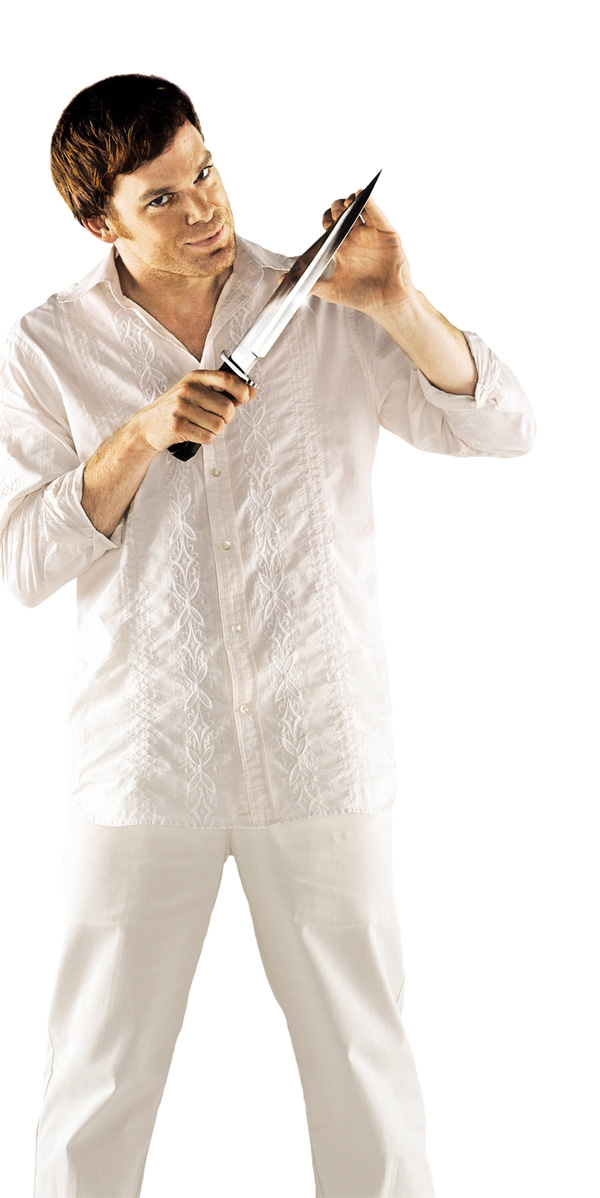
Batman is the classic vigilante of the geek crowd. We don't just love him because he fights crime, we also love him because he has all the cool gadgets and a cape. But the television show Dexter takes vigilantism to a whole new level. Based on a series of books by Jeff Lindsay, Dexter follows the story of an ordinary seeming guy who has the heart of a serial killer. Trained by his adopted father-- a career cop-- to only target the unpunished dregs of society, Dexter preys on the worst-of-the-worst criminals. On screen we can sympathize with Dexter because the idea of a child-predator getting what they have coming to them isn't hard to root for. But how would we feel if we found this was happening for real? Something tells me this kind of compartmentalization can only happen in a fantasy world and I'd be mighty nervous with Dexter as my neighbor.


Would We REALLY Tolerate Someone Who Turns to a Life of Crime When Things Get Tough?


We already know the answer to this don't we? We hear stories all the time of people who fall on hard times and resort to theft, drug-dealing or other crimes to supplement their income, and our usual fall-back position is one of get a job! But shows like Weeds and Breaking Bad somehow get us to suspend judgement long enough to watch the hair-raising experiences of an average Joe (or JoAnn) try to negotiate a path through the sleazy world of selling drugs. We bite our nails and cringe in sympathy as long as we know it's not real, but if these people ended up the nightly news I doubt we'd think twice about their jail sentence no matter how compelling the sob-story is.


Would We REALLY Tolerate Rudeness if it Was Delivered as Comic Aside?


Suppose for a second that the Transformers story was plausible. I know I'm asking a lot-- but just pretend. And imagine if you were an alien who observed the human race through our entertainment. Just think of the kind of behavior they would think was normal. They'd assume a Vince Vaughn style monologue was a normal means of communication. That Jane Lynch's nasty comments as Sue Sylvester on "Glee" wouldn't get her fired or sued. That, like the Cracked.com article states, you can get away with murder (metaphorically speaking) if you have a high I.Q. Insults fly fast and furiously on our favorite shows and while they might register, briefly, thanks to the laugh-track, the snark goes mostly unrecognized and unpunished if it's delivered in the right way. But supposed this happened in the real world-- how would that go over?


Would We REALLY Tolerate Comedic High-Jinks in Place of Common Sense?


Those of you who are a little bit older, like me, will remember the show Three's Company. It set the standard in my young mind for situation comedies back then. For those who don't know the premise-- it's this: Jack Tripper (John Ritter) is a single guy living with two attractive women (Suzanne Sommers and Joyce Dewitt). In order to keep up his living arrangement (which apparently was the business of the landlord in those days) Jack pretended to be gay (which raised fewer eyebrows in the 70's than co-ed living in this scenario). Every week a new crisis would occur that could "out" Jack and he and his roommates would have to come up with some elaborate scheme to keep their secret. Make sense? Yeah, absurd I know. But this is what situation comedies do. Instead of just telling someone they have bad breath, an unflattering hairstyle or that you don't like their cooking (the normal solution) these shows have our main characters coming up with convoluted plans that often involve dressing up in costume (if you have kids you see this on Hannah Montana all the time) or some other ridiculously unrealistic ordeal. When has this happened in real life? Ever?


Would We REALLY Tolerate Someone Coming to Work Dressed Like a Catholic School-Girl?


I know all the guys are thinking yes-- yes I would. If you watch NCIS then you probably know where I'm going with this one. Abby Sciuto (Pauly Perrette) is the forensic expert on the show who regularly comes to work in very short skirts, dog collars and platform boots. A goth Catholic school-girl really. She's presented as being savant-like smart and therefore oh-so-quirky. But does this happen in real life? I mean, my husband works for a corporation that frowns on male facial hair (I don't know what the policy is on feminine facial hair). It seems like a lot of shows have this fantasy portrayal of science/computer geeks as being so indispensable that company policy never applies and they can be as sloppy, rude or anti-social as they want to be. But I have never actually seen this in real life. What I think this really means is that a lot of geeks end up writing television scripts.


I could go on. When I think of NCIS I also think of Jethro Gibbs and the whole renegade-boss thing. You know, the guy who constantly breaks the rules but get's away with it because he's that good. Or the super-sexy female agent like Ziva David, who fits into the same mold as Sidney Bristow ("Alias"), that can not only kick your butt but speak five languages while doing it.


It's obvious that we like our fantasies. And that's fine. But there does seem to be a line that is invariably crossed that makes it harder and harder to play along when the storyline gets really outrageous. When it 'jumps the shark' as it's commonly now referred to. It's also becoming clear that Hollywood is pretty much always recycling ideas. I mention a few specific shows here, but I'm sure everyone can think of more than one show (or movie) that fits each example above.


What would you REALLY tolerate?

Friday, October 15, 2010